
Device prices
A formula created by the International Society for Prosthetics and Orthotics allowed 500 miles to calculate the “full cost of production” of each prosthetic and orthotic device by taking into account the cost of everything used to produce it.
It doesn’t cost much to make a huge change in someone’s life
This formula brought out an average price of £175, which was also the full cost of production of a trans-tibial prosthesis. The same device through the NHS in Scotland would cost over £4,500 to make, and over £10,000 if you were buying it privately. The Scottish device is made from superior materials and components and its function and comfort will usually be better – but both devices achieve the same basic purpose of getting the patient mobile, able to work, go to school and participate in community life – making £175 look like a complete bargain!
Below are the most commonly supplied prosthetic and orthotic devices/components with their full costs of production. Just click on a device to find out how it works, when it is used and how it can transform a real person’s life.
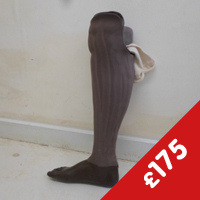
Trans-tibial prosthesis
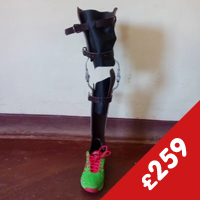
Knee ankle foot orthosis
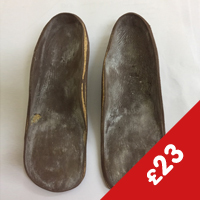
Orthotic insole
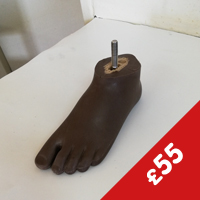
Replacement foot

Shoe raise
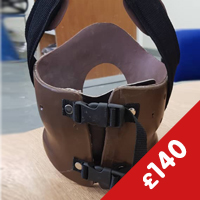
Spinal corset
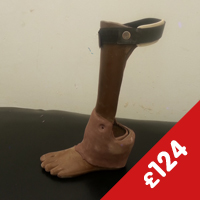
Symes prosthesis
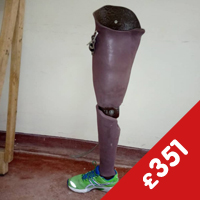
Trans-femoral prosthesis
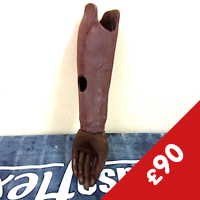
Trans-radial cosmetic hand
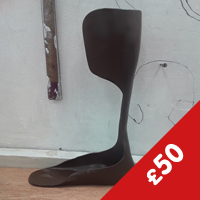
Ankle foot orthosis
These full costs of production are for adult devices. Children’s prostheses are a bit more expensive as the components are more intricate, but orthoses for children tend to be a bit cheaper as less materials are used.
500 miles’ calculations to arrive at the full cost of production of the devices indicated above, were made quite a few years ago but, due to the devaluation of the Malawi Kwacha (MWK) relative to the British Pound (GBP), particularly in relation to labour costs in Malawi, they remain reasonably accurate.
Again, due to the devaluation of the MWK, the list prices of devices at the P&O Department at LION in MWK when converted to GBP, are considerably lower than the full costs of production e.g. 112,800 MWK (approximately £50) for a trans-tibial prosthesis which costs around £175 to make.